
TheNewspaper.com


top headlines:

Wednesday, May 22, 2013
Maryland, UK: Complaints Upheld Against Speed Camera Operators
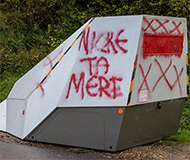
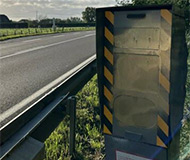
SPECS speed cameraMembers of the public are having success holding speed camera companies and their customers accountable. This week, governmental agencies in England and Maryland upheld citizen complaints against the proponents of automated ticketing. On Wednesday, the UK Advertising Standards Authority (ASA), an independent government agency that enforces UK laws against false advertising, announced the speed camera firm Vysionics had agreed to drop from all future advertising material its claim that photo enforcement caused a 70 percent reduction in accidents. The authority looked into the matter after Malcom Heymer with the Alliance of British Drivers (ABD) lodged an objection in February. "In a formal investigation, if the ASA Council decides that an ad is in breach of the code, the advertisers are told to withdraw or amend it," ASA investigations executive Simon Lane wrote in a response to Heymer ( view ASA ruling, 85k PDF). "Because Vysionics have already assured us that the advertising you complained about will be amended in the future, we consider there is little to be gained from continuing with a formal investigation, which would achieve that same outcome." The British motorist rights group was pleased that the watchdog agency has once again objected to the statistics used to market photo enforcement. In 2006, the agency ruled against a speed camera pamphlet issued by Greater Manchester. In 2005, it agreed that West Yorkshire speed camera operator used bogus statistics in a poster. "This is long overdue recognition that the claims of the whole speed enforcement industry are exaggerated and self-serving," ABD deputy chairman Brian Gregory said in a statement. "The huge increase in speeding penalties in recent years has contributed nothing to the downward trend in casualties which, since 2008, has been largely due to the economic downturn." On Monday, Maryland's Open Meetings Compliance Board found the city of Baltimore guilty of violating state law regarding the meetings of a speed camera advisory task force, siding with a complaint filed by the Maryland Drivers Alliance. The board upheld the complaint on all three grounds: the task force excluded the public from meetings, it failed to maintain minutes and it did not give proper notice of meetings. The board stated there were no notices posted on the city's transportation department website. It also blasted the "minutes" that the task force produced after the fact as wholly inadequate. "The 'minutes' of the November and January meetings contain only the agenda and the words 'No actions were taken,'" the board ruled. "The method by which the minutes were adopted is unclear, as 'no actions were taken' at any meeting; the attendees of the meetings are not listed; the chair or other presiding officer is not identified; the presence of quorum is not stated." On March 20, reporters for the Baltimore Sun recorded on video their exclusion from an official task force meeting at the Brekford Corporation's headquarters in Hanover. The board refused to accept the city's excuse for its actions. "A public body must refuse to meet at a private facility when the owner will not admit the public," the board ruled. "The act would be meaningless if it were interpreted to allow public bodies to meet secretly at private facilities... Members of public bodies should be made aware at the outset that their public service includes the duty of openness, and specifically, that the public must be given a meaningful opportunity to attend their meetings." A copy of the Maryland ruling is available in a 250k PDF file at the source link below.
Source: PDF File Baltimore Automated Enforcement System Task Force (Maryland Open Meetings Compliance Board, 5/20/2013)


Tuesday, May 21, 2013
Tolling Interstate 95 In Virginia, North Carolina Hits Roadblock
I-95 reportPlans to convert Interstate 95 into a toll road in North Carolina and Virginia have run into a roadblock. On Tuesday, the North Carolina House of Representatives will vote on final passage of a measure that would prohibit the state from installing toll booths on existing general purpose lanes. The measure passed on a preliminary vote 113-0 last Thursday. If enacted, House Bill 267 would grant tolling authority only if the state "maintains at all times at least the same number of general purpose non-toll lanes on the affected segment that were available prior to imposition of any tolls." The revenue collected could not be diverted to fund other, unrelated projects. Just last week, the North Carolina Department of Transportation (NCDOT) issued a report on how much revenue would be generated by collecting tolls that would run $19.20 for a passenger car making a statewide journey. North Carolina already imposes a 37.5 cents per gallon tax on gasoline that automatically rises with the wholesale price of gasoline. On top of this, drivers on I-95 would be hit with between $250 million and $928 million in annual tolls, according to the NCDOT analysis. One of the plans still on the table is called "local mitigation" where drivers from out-of-state would be charged a discriminatory 50 percent premium compared to North Carolina residents in the local area. The No Tolls I-95 Coalition opposes the tolling scheme as bad for commerce. "I-95 is the primary transportation artery not only for North Carolina destinations but also for overnight stays and travelers will divert to other roads to avoid tolls," Jerry Dimeo, President of First Carolina Management, said on behalf of the coalition. "This [would] have a significant negative impact for many counties and businesses in the state that depend on tourism for their livelihood as well as make us far less competitive with other states." The tolling plans of Virginia Governor Robert F. McDonnell (R) were similarly undermined by a vote of the legislature in February. "That no tolls shall be imposed or collected on Interstate 95 south of Fredericksburg pursuant to the Interstate System Reconstruction and Rehabilitation Pilot Program without the prior approval of the General Assembly," the law enacted last month stated. Adding to the difficulty of tolling, Portsmouth Circuit Judge James A. Cales Jr ruled on May 1 that the use of a state transportation agency to impose tolls without a vote of the General Assembly represents an unconstitutional delegation of the power to tax. The ruling directly shuts down tolling plans for the Elizabeth River Crossings while raising questions about the legality of Governor McDonnell's tolling plans for other roads throughout the state. Should the judiciary delay the effort beyond the November election, the leading candidate to take the governor's mansion in Richmond, current Attorney General Ken Cuccinelli (R), prefers the legislative model just adopted by the North Carolina House, only allowing tolls for new capacity. "I favor a user fee toll road system for new highways as a transportation policy -- that's a pretty conservative approach," Cuccinelli told Breitbart News in February. "I explain why it makes Virginia better to go this way instead of another way." Cuccinelli also said he disagreed with Governor McDonnell's approach of hiking fees on the Dulles Toll Road to fund a $6 billion Metrorail train to Dulles International Airport. A copy of the North Carolina legislation is available in a 90k PDF file at the source link below.
Source: PDF File House Bill 267 (North Carolina General Assembly, 5/16/2013)


Monday, May 20, 2013
Baltimore, Maryland Denies Speed Camera Cover Up
Speed cameraEarlier this month, the city of Baltimore, Maryland told the state's Open Meetings Compliance Board that it was keeping meetings of the city's speed camera task force secret, in violation of state law. Assistant City Solicitor Hilary Ruley provided screenshots from the Wayback Machine, to show that announcements were placed somewhere on the website at some point for a pair of meetings. "This is the best evidence that the city can currently locate of the fact that all of the task force's meetings were advertised," Ruley wrote. "Again, it invited the media and the general public to attend all of its meetings and the media did attend each meeting." The controversy developed last month when three motorists representing the Maryland Drivers Alliance complained to the state that Mayor Stephenie Rawlings-Blake set up a speed camera task force -- a government body -- that held secret meetings with the photo enforcement firm Brekford in violation of the Maryland's open meeting law. The city's response did not satisfy critics. "Please note also that that city provided screenshots from web.archive.org for notices of just two of their meetings," Louis M. Wilen, one of the three who filed the original complaint, wrote in an emailed response to the board. "The additional three pages that Baltimore City provided are work orders, not actual evidence that meeting notices were posted. I realize that the OMA Compliance Board procedures do not provide for yet another response from the complainants, but I hope that the OMA Compliance Board will consider the above information when making their decision." The speed camera task force was set up in September 2012 so that members of various pro-speed camera organizations, including AAA, and city employees could discuss photo ticketing policies. The most controversial meeting of the group was held on March 20 at the Brekford Corporation's headquarters in Hanover. Reporters for the Baltimore Sun attempted to enter the meeting but were turned back. The interactions were recorded on video. The complaint also alleged the speed camera task force failed to keep minutes of the meetings or refused to make these documents public. Baltimore admits the task force is subject to state law but denies any violation. "The task force has been in the process of compiling meeting minutes," Ruley wrote. "As the OMA manual recognizes, there is no standard reasonable time for creation of meeting minutes and certainly draft meeting minutes need not be made public." The city included in its response to the state a set of newly generated, bare-bones minutes for the six meetings of the task force. The individuals who filed the complaint were not satisfied, citing a precedent where routine delays of "several months" in producing minutes were found to be unlawful. They were also unsatisfied with the level of detail provided by the documents. "At best, the minutes consist of an agenda followed by a mixture of random phrases and undefined acronyms combined occasionally with marginally understandable sentences," Wilen and others wrote in response. "The minutes from two of the meetings do not provide any information beyond an agenda." If the open meeting compliance board upholds the complaint, each individual participating in the speed camera task force could be fined $100.


Friday, May 17, 2013
California: City Obsessed With Red Light Camera Ticket Numbers
Menlo Park red light cameraCalifornia is the largest market for red light cameras in the country thanks to the fines set by the state running nearly $500 each. Municipalities that adopt the technology are quick to deny any possibility that financial considerations have anything to do with their decisions to monitor local intersections. Internal discussions between the city of Menlo Park and camera vendor Redflex Traffic Systems suggest otherwise. Menlo Park is currently in the process of deciding whether to renew its contract, so earlier this month the city signed a sixty-day extension allowing four cameras to continue operating until July 2. The decision of whether to install a fifth camera hinges on the number of citations that can be generated, not on any accident reduction consideration, according to a review of emails between the Menlo Park Police Department and Redflex. Redflex currently charges a monthly fee of $5651.50 for each intersection camera it operates. That means to be profitable, a location must generate just twelve paid tickets each month. On March 11, Redflex spent twelve hours videotaping traffic at the intersection of Bayfront Expressway and Chilco Street, counting how many tickets it might be able to issue in that time. For the eastbound direction, the company counted zero violations caused by a driver running straight through a red signal -- the type of violation that might cause an accident. Instead, there were 114 vehicles turning right on red, a maneuver that, though ticketable, is rarely dangerous according to federal data (view study). The result at the intersection would be sufficient to issue $650,000 worth of tickets annually. "My only question is: since most of the violations are right turns, how long would that be sustainable?" Traffic Sergeant Sharon A. Kaufman asked in a March 28 email to Redflex. "Once behavior changes will we see a drastic reduction in the number of citations/violations?" The response from Redflex account representative Mark Riggs presupposed no such behavior change. "The normal process for a new approach is the first few months there will be high numbers then it will begin to decline and stabilize," Riggs replied. "Where it drops is anyone's guess due to all of the variables involved. I can say that most intersections that have right turns enforced continue to produce consistent numbers." The emails show that Menlo Park has not changed its ways since it was slammed three years ago by the San Mateo County Civil Grand Jury for focusing solely on citation numbers (PDF File view grand jury report, 1mb PDF file). "Based on interviews and responses to survey questions, the reporting of accident statistics is not being used as a measure of the effectiveness of red light cameras," the grand jury found. "The primary emphasis appears to be on the number of citations issued. Based on the data provided by the cities, there was no overall trend indicating a noticeable change in accident rates before and after installation of red light cameras." From 2008 to 2012, Redflex issued 23,066 tickets worth $11 million in Menlo Park. In February and March of this year, Redflex mailed $330,000 worth of tickets, according to data supplied by HighwayRobbery.net.
Source: PDF File Internal city emails to Redflex (City of Menlo Park, California, 3/28/2013)


Thursday, May 16, 2013
Maryland: Another City Forced To Refund Illegal Photo Tickets
Calibration certificateHagerstown, Maryland announced Wednesday that it would refund 808 illegally issued speed camera tickets. Brekford Corporation mailed the citations between the end of December and January using three automated ticketing machines that failed to meet the certification requirements of state law. "A speed monitoring system shall undergo an annual calibration check performed by an independent calibration laboratory," Maryland Code Section 21-809 states. "The independent calibration laboratory shall issue a signed certificate of calibration after the annual calibration check that shall be kept on file; and shall be admitted as evidence in any court proceeding for a violation of this section." A motorist who intended to fight a photo ticket requested the calibration certificate for use at trial in January, but the city responded with a March 5 letter denying the request, despite the law's requiring calibration documents be kept on file. The Maryland Drivers Alliance investigated the incident and forced the city to release an "in-house" calibration certificate from Sensys, the Swedish firm that manufactured the speed camera that Brekford operates on Hagerstown's behalf. Another court challenge used the newly obtained documents and Washington County District Court Judge Mark D. Thomas agreed that the lack of independent certification rendered the citations void. All charges were dismissed. The finding raises the potential of similar refunds for citation recipients in the city of Laurel where six of Brekford's speed cameras operated under calibration certificates provided by the speed camera manufacturer Sensys, not an independent lab. In December, Baltimore was forced to issue refunds for photo radar tickets after Xerox, the company that operates the cameras on the city's behalf, admitted that 5.2 percent of the tickets were issued based on bogus radar readings (view report). The Maryland Drivers Alliance is encouraging ticket recipients in the state to file a public information act request for the calibration certificates before paying any fines. The group provides a sample request form on its website and offers to assist motorists in understanding the documents.


website features

This is a journal covering motoring issues from around the world from a political perspective.


search tips | about us | site map

Subscribe
Receive free email or RSS news updates. RSS Feed

Key Documents
Documents, studies and memos about camera enforcement.

Archives
View previous news items.

Feedback
Contact the editors.

View Main Topics:


Popular Stories

-Missouri Cop Harassment Video

-Photo Enforcement Bans

-Most Popular Stories

Popular Studies

-Red Light Camera Study Roundup

-2007 Virginia DOT: Cameras Increase Injury Accidents

-2005 Washington Post: Accidents Doubled with Cameras

-2004 North Carolina: Red Light Camera Study (Burkey-Obeng)

-Majority Leader Armey Red Light Camera Report

-Longer Yellows Reduce Crashes (TX Transportation Institute)

-HOV/Carpool Lanes Cause Accidents


Did you know?

Since 1999, Washington, D.C. cameras have issued 4,500,103 tickets worth $312 million (as of 5/30/10).
---
Next Page
Next Page

theNewspaper.com: A Journal of the Politics of Driving
Archives | Contact | Site Map | Search | Documents | Privacy Policy