



3/14/2006
Virginia: Traffic Cameras Fail to Reduce CongestionFederal Highway Administration report shows surveillance-style traffic cameras fail to reduce congestion in Northern Virginia.
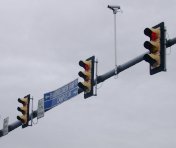
A Federal Highway Administration (FHWA) study of 76 video-based traffic detection devices installed along a twenty-one mile stretch of Route 7 in Northern Virginia concluded that the devices failed to deliver on their promise of reduced congestion. U.S. Representative Frank Wolf (R-VA) commissioned the report that he released earlier this month which faults the Virginia Department of Transportation's one-size-fits-all approach to installing the cameras.
"The performance of the detectors was found to be unacceptable," the report stated. "Camera location should have been analyzed on an intersection-by-intersection basis.... This type of analysis can serve to point out issues such as occlusion, low sun light intrusion and others in the design stage."
The video imaging detector system uses software to "see" when a vehicle approaches an intersection and change the signal timing accordingly. For local transportation agencies, cameras have been an attractive option since, despite their cost, they can be easier to maintain and offer new surveillance options. FHWA found that the detection software became confused when small vehicles were obscured by large trucks or sun glare blinded the camera. As a result, the Virginia system routinely failed to detect vehicles or over-counted others.
"Use of over counted data will disrupt the operation of the signal in real-time, as well as skew the data needed for planning purposes," the report stated.
Inductive loop sensors buried in the pavement now detect the presence of vehicles on Route 7 and the old-fashioned system was found to be substantially more accurate. Congressman Wolf, who secured $1 million in federal funds for the cameras, hopes that "the kinks in the system will be worked out."
The full report is available in a 1.2mb PDF file at the source link below.